
Instafill.ai, a fast-growing AI form filler startup, is gaining momentum by solving one of the most painful problems in business operations: turning messy documents, PDFs, spreadsheets, emails, and client records into completed forms without hours of manual data entry. What started as a simple way to fill out PDF forms with AI has expanded into a broader document automation platform for legal, healthcare, insurance, real estate, construction, agriculture, and other paperwork-heavy industries.
The platform now supports much more than basic PDF autofill. Instafill.ai can work with fillable PDFs, flat PDFs, scanned documents, and Word documents exported as PDFs. It can detect fields, understand layouts, convert non-fillable forms into interactive fillable PDFs, extract information from multiple sources, and generate completed documents in minutes. That makes the product useful not only for one-off form filling, but also for repeatable workflows where teams need to process the same forms again and again with different client, patient, vendor, or case data.


Surging Traffic and User Engagement
Within just three months, Instafill.ai saw a major spike in traffic. Monthly visits grew from around 4,000 in February to 17,000 by April 2025. This growth reflects a broader shift in how businesses and professionals are searching for AI-powered tools that can reduce repetitive document work, especially around PDFs, intake forms, applications, compliance packets, and government paperwork.
The engagement metrics also point in the right direction. Visitors are spending more than 3 minutes on average per session, while the bounce rate is around 33%. For a productivity tool, that is a strong signal that users are not just landing on the site by accident. They are actively exploring the product, testing the workflow, and looking for a practical way to automate form filling instead of manually copying information field by field.
Dominating Organic Search for AI Form Filler Keywords
Instafill.ai has also made major progress in organic search. The platform increased its keyword footprint by more than 1,800 organic keywords and now ranks for high-intent terms related to AI form filling, PDF automation, and online form completion. Its growing Domain Rating of 27, along with more than 206,000 backlinks and 112 referring domains, shows that the brand is building real authority in the document automation category.
Most of the organic traffic comes from the United States, where the company ranks for commercial and branded keywords such as “AI form filler,” “automated PDF form filler,” and “online form automation.” This is especially important because these are not generic informational searches. People searching for these terms usually have an immediate problem: they have a form, they have data, and they want the form filled faster.
The Product Has Expanded Beyond Simple PDF Filling
The biggest update is that Instafill.ai is no longer just a tool for filling out a single PDF. It is becoming an automation layer for entire document workflows. Users can upload a form once, let Instafill.ai detect and prepare the fields, and then reuse that form many times with different source data. The system supports natively fillable PDFs, flat PDFs, scanned PDFs, and Word documents exported as PDFs, which opens the door to forms that previously required manual conversion or tedious editing before automation was even possible.
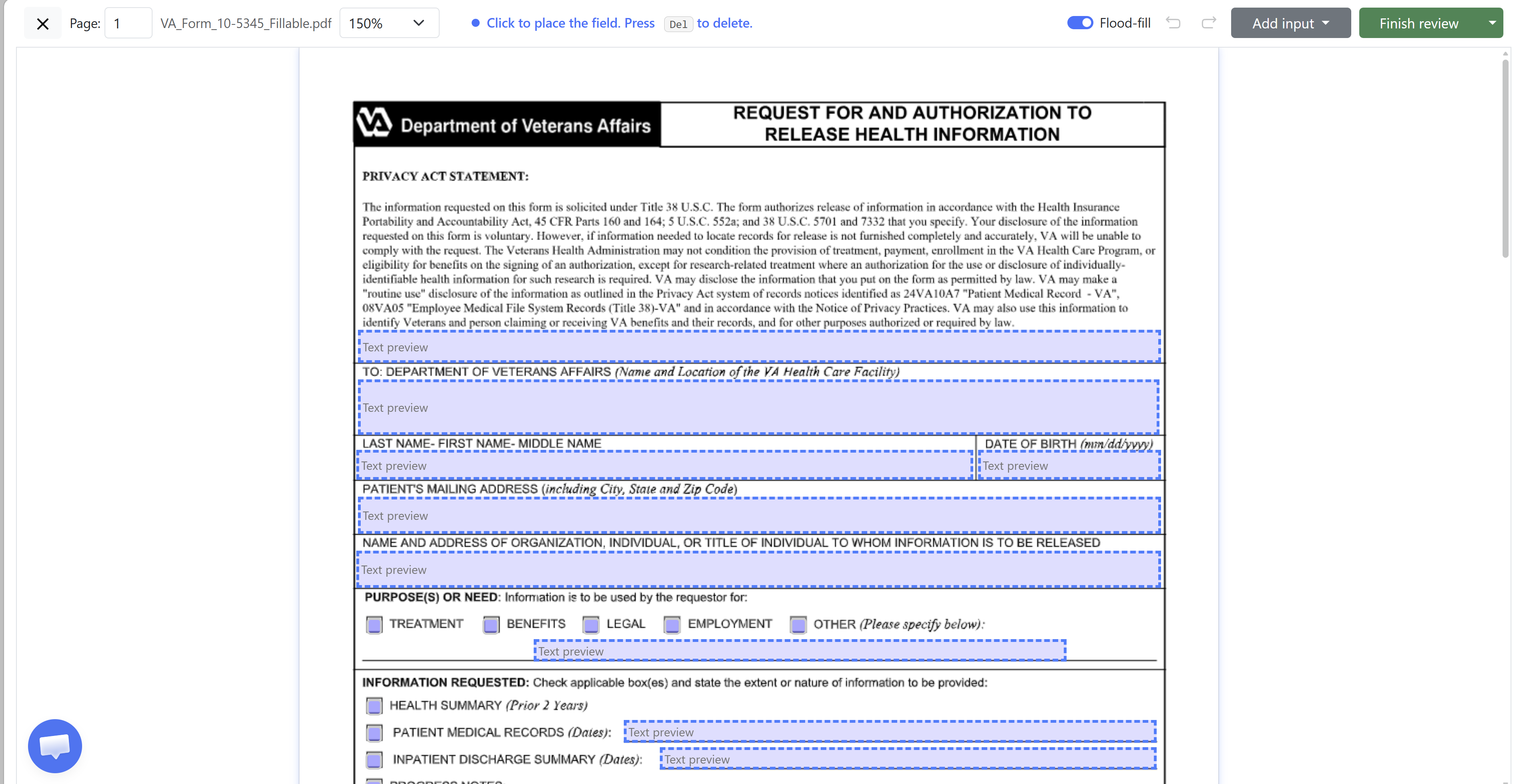
Instafill.ai also added batch processing, which is a major step for teams that deal with high-volume paperwork. Instead of filling one form at a time, users can upload a CSV or spreadsheet and generate many completed PDFs from the same template. This is useful for onboarding packets, licensing forms, patient paperwork, vendor applications, insurance documents, and other repeatable workflows where the same form needs to be completed for many people or companies.
Another important update is automation through email, webhooks, and API integrations. Instafill.ai can now receive source data from emails, form platforms, CRMs, Zapier, Make.com, n8n, and custom HTTP workflows. For example, a company can connect a client intake form or email submission to Instafill.ai, have the AI extract the information, map it to the right fields, and return a completed PDF automatically. That turns Instafill.ai from a manual upload tool into a backend workflow system.
More Advanced AI for Complex Forms
The company has also added features that make the AI more useful for complex business forms, not just simple name-and-address PDFs. Instafill.ai can extract data from multiple sources, including uploaded files, pasted text, email attachments, saved profiles, and webhook data. This matters because real-world form filling rarely depends on one clean source. A user may need to pull details from a resume, insurance card, prior application, email thread, spreadsheet, client intake form, or supporting document.
Instafill.ai is also improving how it handles tables and lists. Many professional forms include repeated rows, line items, schedules, employment history, property details, insurance entries, patient data, or vendor records. The platform can detect table structures, read column headers, and map the right values into the right rows instead of treating the table as a random group of fields. That is a big differentiator for legal, healthcare, real estate, construction, and compliance forms, where tables are often the hardest part to automate.
One of the more interesting newer features is style replication. Instafill.ai can learn from previously completed forms or manually added examples so that generated text matches a user’s phrasing, terminology, formatting, and writing style. This is especially useful for narrative fields, clinical notes, legal descriptions, incident reports, construction scopes, and other sections where the answer must be factually correct but also sound like it came from the organization using the tool.
Built for Real Business Workflows
Instafill.ai’s growth is backed by practical use cases across industries. Businesses are using the platform for legal intake, healthcare credentialing, real estate forms, construction paperwork, insurance documentation, agriculture compliance, onboarding packets, and other workflows where manual form filling slows teams down.
The newer platform direction makes these use cases more powerful. A legal team can process client intake forms and generate completed documents from submitted data. A healthcare or credentialing team can reuse the same provider information across multiple forms. A construction company can batch-fill vendor packets or compliance documents. A real estate team can prepare repetitive transaction forms faster. Instead of hiring more admin staff or forcing professionals to spend time copying data into PDFs, Instafill.ai lets the same team process more documents with less manual work.
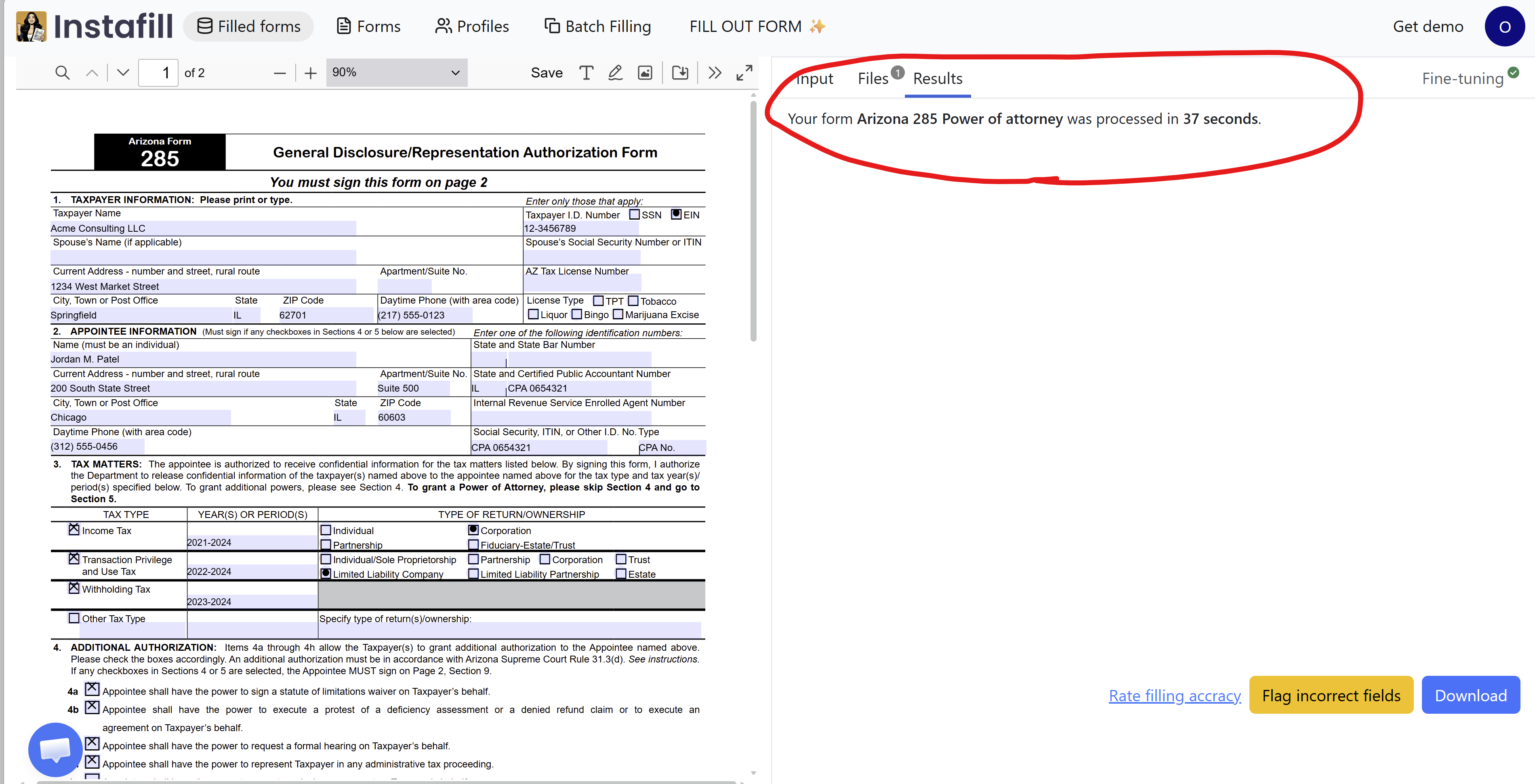
The platform also includes review and correction workflows. After the AI fills a form, users can review the completed PDF, make edits, flag incorrect fields, and improve accuracy for future sessions. This is important because business users do not only need speed. They need control, reviewability, and a way to improve results over time when working with high-volume or sensitive documents.
Browser Extensions and Free Tools Expand the Funnel
Instafill.ai has also expanded the ways users can discover and use the product. The Chrome extension can detect when someone is viewing a PDF form online and let them fill it with Instafill.ai directly from the browser. That makes the product easier to use in everyday workflows where users find forms on government, legal, insurance, healthcare, or business websites.
The company also launched a free AI tool for creating fillable PDFs. This tool converts flat and non-fillable PDFs into fillable PDF forms, which is a strong top-of-funnel product because many users first discover the problem before they discover the broader automation opportunity. They may start by searching for how to make a PDF fillable, then realize Instafill.ai can also fill, batch process, automate, and sign documents.
Leading the Shift Toward Automated Document Workflows
Instafill.ai is benefiting from a clear market shift. Businesses do not want another PDF editor that still requires manual work. They want AI systems that can understand documents, extract the right information, fill the right fields, handle repeatable workflows, and reduce the amount of admin time spent on paperwork.
That is where Instafill.ai’s positioning is getting stronger. The product now combines AI form filling, flat PDF conversion, batch processing, email automation, webhook/API integrations, browser extensions, reusable profiles, table handling, style replication, review workflows, and e-signing into one platform. Each feature makes the product less like a simple PDF utility and more like a document operations system for companies that process forms every day.
As demand for intelligent document automation continues to grow, Instafill.ai is well-positioned to become one of the leading AI form filler platforms in 2026 and beyond. Its organic growth, improving SEO visibility, expanding feature set, and real-world business use cases all point to the same trend: form filling is moving from manual data entry to AI-powered workflow automation.