

Disclosure: I’m the founder of Hipa.ai, so read this as a founder’s account. All numbers come from our production data on 17 November 2026.
Many clinical trials struggle to find enough participants, and many people who could join one never hear about it. The public registry, ClinicalTrials.gov, holds the information, but it was written for researchers. Hipa.ai sits between the two groups: patients search recruiting US trials in plain language and apply in a few minutes, and the research teams running those trials receive the application.
Applications opened in June 2026. Here is what has happened since, how the platform works, and what we learned about making a medical application easy to finish.
The numbers so far
From 1 June to 17 November 2026:
About 1,650 completed applications from about 870 people. Roughly one applicant in three applied to more than one study.
About 1,000 different trials received at least one application, from more than 460 study sponsors.
About 940 research organizations, meaning research sites and sponsors’ study contact teams, have been notified about applicants.
About 1,230 applications were delivered to a study contact.
Nearly 1,500 different conditions were covered by the trials people applied to.
Under 3 minutes is the median time to complete an application. The form tells people to allow 5 to 10 minutes, so most finish sooner than they expect.
83% finish. Among applicants who are not screened out by a trial’s basic requirements, 83% complete the application.
Late-stage research is the largest group: about 29% of applications went to Phase 3 trials and about 14% to Phase 2.
What the platform does
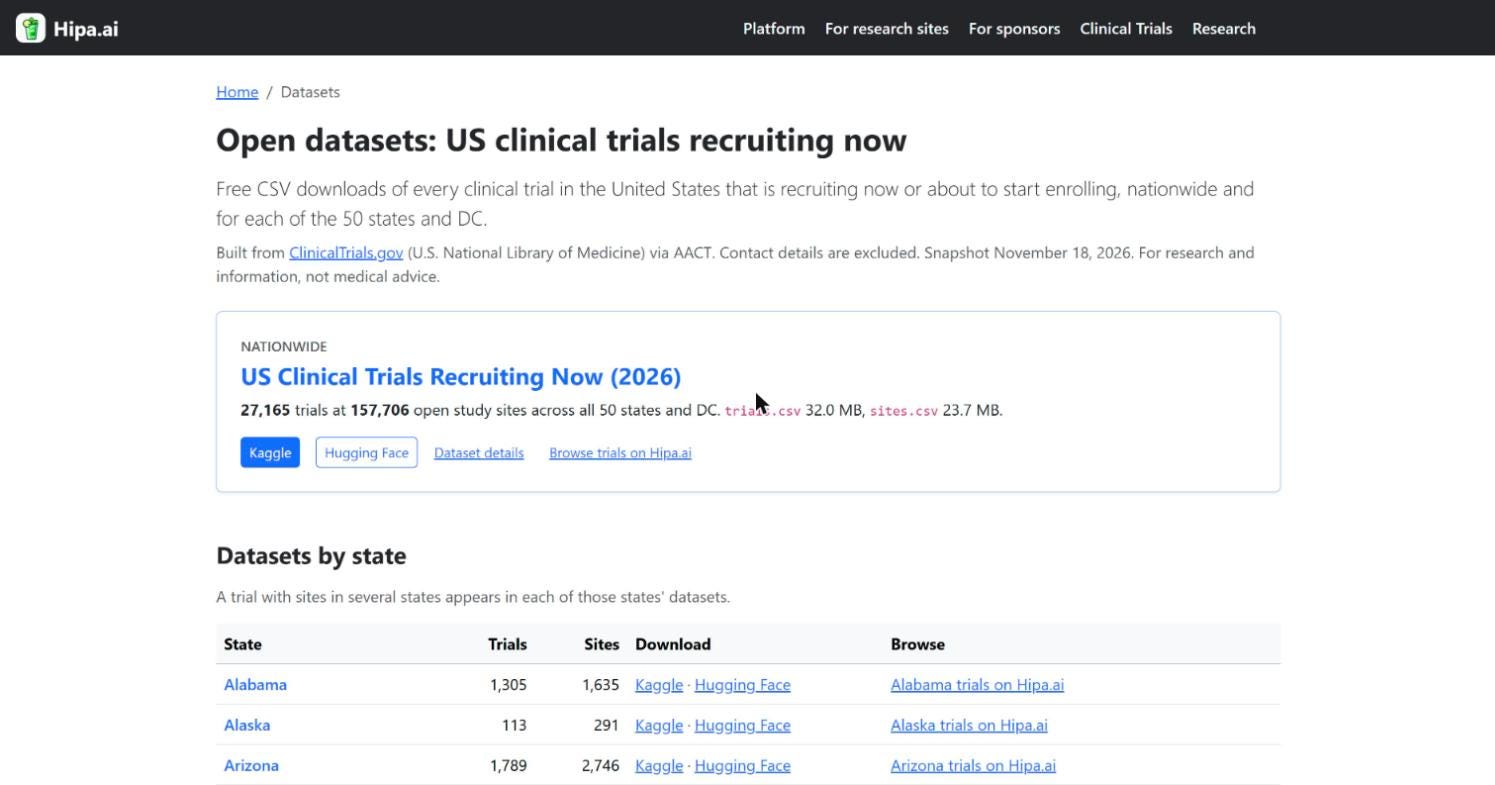
Hipa.ai is built on the public registry data. In the 13 November 2026 snapshot it covered 27,165 trials and 157,706 US trial sites. The data is refreshed every weekday.
For patients and caregivers, the trial search works by city and condition. Each study page explains what is being tested, who can join and where it runs, and the application starts from that page. It is free.
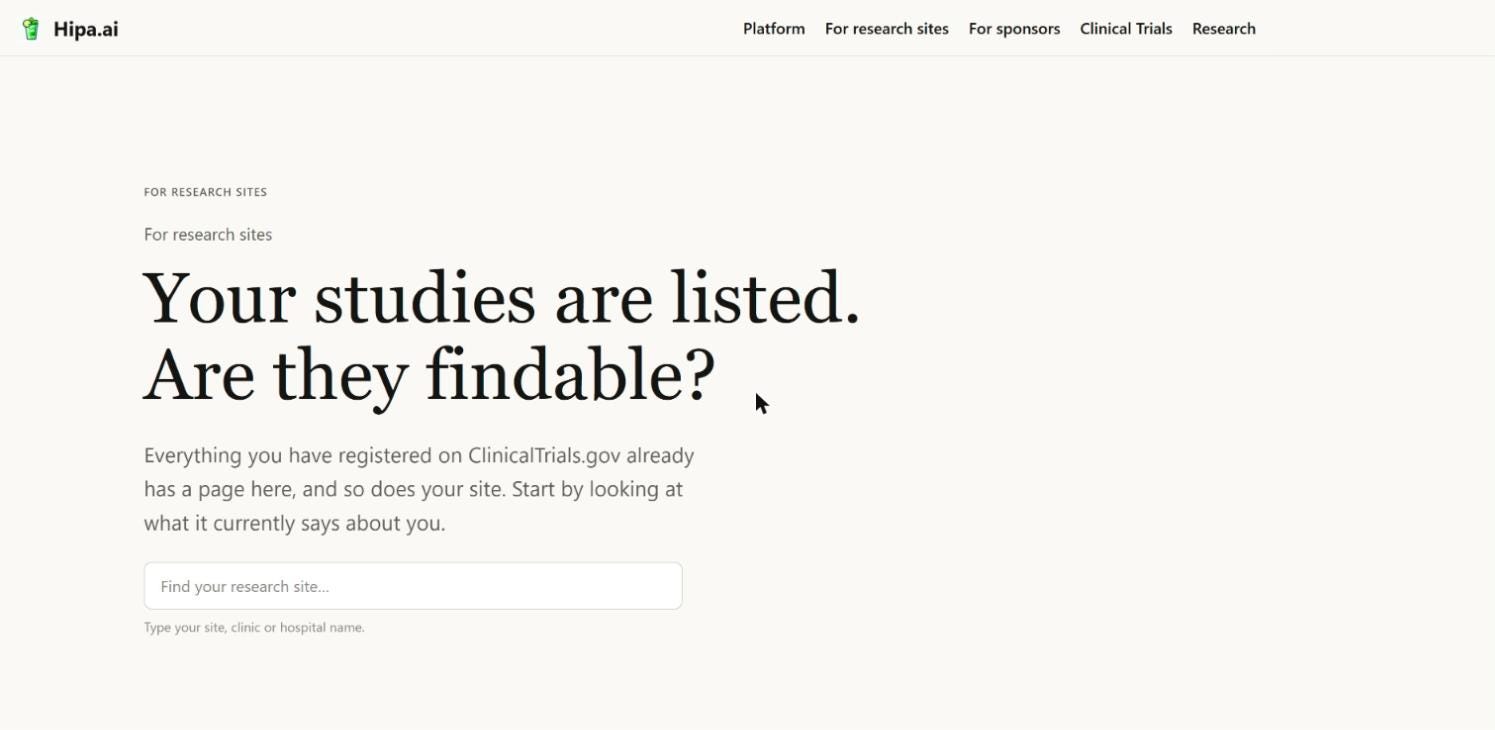
For research sites, an application arrives with the answers a coordinator would otherwise collect on a first phone call. A site portal shows who is waiting and lets the team update each applicant’s status. Sites can also get a free storefront page on hipa.ai.
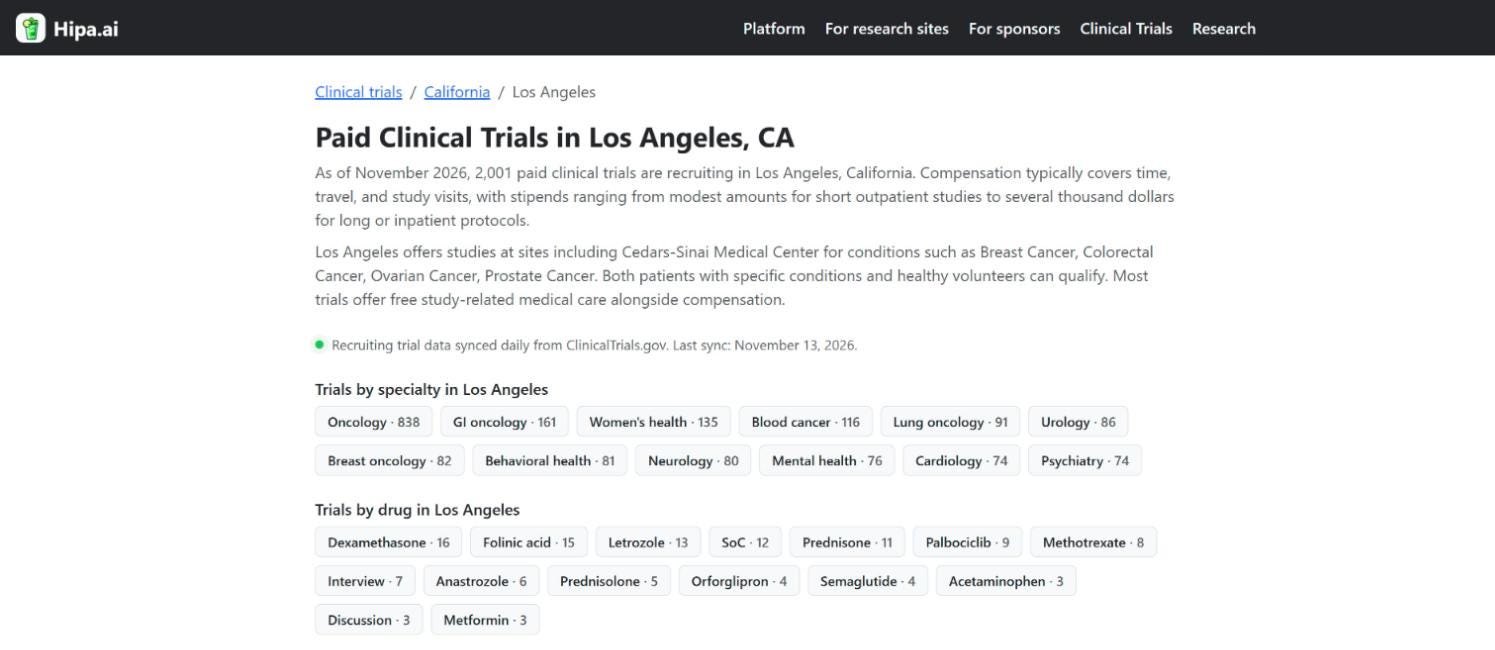
For sponsors, Hipa.ai is a way to reach people already looking for a study in a particular place and condition.
For AI assistants and researchers, the same data is open. The Hipa.ai Clinical Trials connector is listed in Claude’s Connectors Directory, so anyone can ask Claude for recruiting trials and get real studies with their registry IDs. We also publish 52 free datasets: one nationwide, one for each state and one for DC.
Why people finish the application
A medical application is an easy form to abandon. People may be unwell or anxious, and they are being asked personal questions by a site they have only just found. These are the decisions that mattered most.
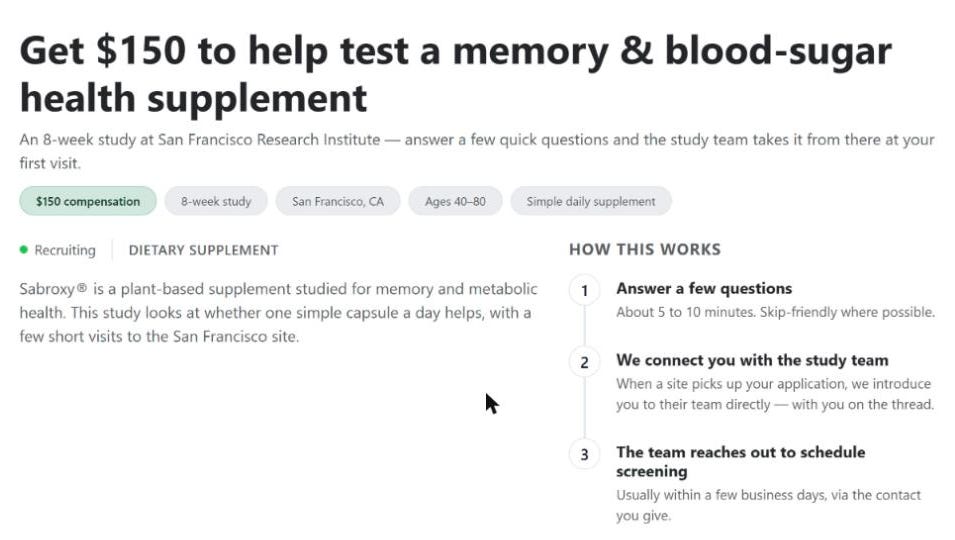
No account or password. Applicants start with an email address and nothing else. Asking for a password up front adds work before the person has received anything in return.
One question at a time. The form moves through short steps: the basics, medical background, then practical matters such as travel and scheduling. A long page of fields looks like more work than it is.
Progress is saved under that email. Someone who has to stop, find a medication name or take a call can come back and carry on where they left off.
An early, honest stop. If an answer clearly rules someone out, such as being under a study’s minimum age, the form ends there. About 200 applications stopped this way. It spares that person from answering questions for a study they cannot join, and it spares the research team an application they cannot use.
Answers are reused. After finishing, an applicant may be offered one other relevant study. Their answers carry over, and nothing is submitted until they confirm it. A “no thanks” ends the offer.
Why this matters to research teams
Coordinators can spend a lot of time contacting people who turn out not to qualify or who cannot get to the site. Collecting the basics up front, including location and practical constraints, means the first conversation can start further along.
The study team still makes every decision. Hipa.ai does not enroll anyone, and no application guarantees a place in a trial.
How it runs
The site is deliberately lean. It runs as a single Go service on a shared virtual machine, with public pages cached at Cloudflare’s edge. That matters because automated crawlers can generate hundreds of thousands of requests a day on a site with this many pages. Serving those from the edge keeps hosting costs low and keeps the application fast for real people.
Where it is limited
US only. Hipa.ai covers trials with at least one site in the United States.
Registry data has gaps. Trial listings are written by sponsors and can be out of date, so a study’s own team has the final word on whether it is still recruiting.
Replies depend on the study team. We can deliver an application, but we cannot make a busy site respond.
It is information, not medical advice. Only a study team can confirm whether someone qualifies, and anyone considering a trial should talk to their doctor.
What comes next
The work ahead is about closing the loop: getting more research sites onto the portal so that applicants hear back sooner. A version for ChatGPT is also in review.
If you are looking for a study, or you run one and need participants, you can start at hipa.ai.